Cavity Wall Insulation – Everything You Need to Know
Introduction
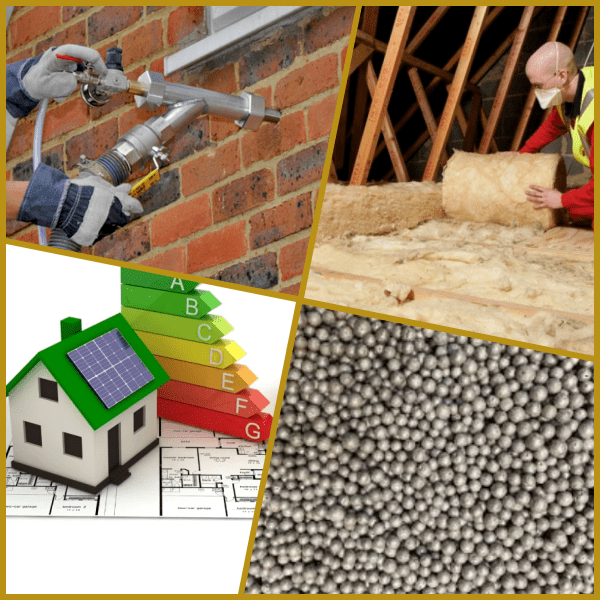
Thinking about cavity wall insulation, but not sure where to start? You’re not alone. Many homeowners want to save on energy bills, make their homes warmer, and reduce their carbon footprint — but they also have questions about costs, suitability, and potential risks.
The good news: cavity wall insulation is one of the most effective and affordable (free under the GBIS grant scheme) home energy improvements available today. In fact, it can cut heat loss through your walls by up to 70%, reduce annual heating bills by hundreds of pounds, and make your home noticeably more comfortable all year round.
To help you decide if it’s right for you, we’ve put together the 50 most frequently asked questions about cavity wall insulation — covering everything from how it works, to costs, grants, installation, and guarantees.
🏠 Cavity Wall Insulation FAQs
1. What is cavity wall insulation, and how does it work?

Cavity wall insulation fills the gap between your home’s inner and outer walls with insulating material. This reduces heat loss, keeping your home warmer in winter and cooler in summer – hence lower fuel bills.
📞 Call us today on 07960 799681 or 08008 101060 or complete our Enquiry Form to request your free survey.
2. How can I tell if my house has cavity walls?
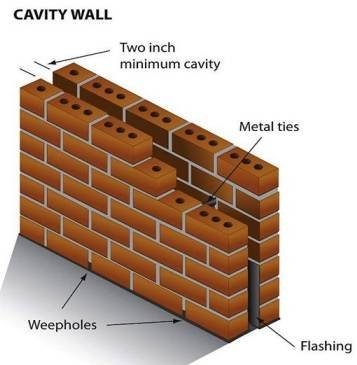
Most homes built after 1920 have cavity walls. A simple check: if your external walls are more than 260mm thick and the brick pattern is alternating (see image above), they are likely to be cavity walls. If the walls are rendered, it is very difficult to tell – a solid brick wall will normally be less than 240mm thick.
📞 Call us today on 07960 799681 or 08008 101060 or complete our Enquiry Form to request your free survey.
3. How do I check if my home already has cavity wall insulation?
Drill holes from a previous installation may be visible on the outside walls, especially under the windows. There are normally 3 drill holes under a window (1 in the middle and 1 at each end). If the walls are not rendered, the holes are in the cement, not the bricks, and they are 2 or 3 bricks below the window. A surveyor can also use a borescope to look inside the cavity and confirm.
📞 Call us today on 07960 799681 or 08008 101060 or complete our Enquiry Form to request your free survey.
4. Is my property suitable for cavity wall insulation?
Homes with unfilled cavity walls and good brickwork are usually suitable. A professional survey will be carried out. However, there are types of cavity walls that should not be insulated.
There are three main exceptions:
Concrete properties – Often former council houses, these may have unfilled cavities. Insulating them can cause structural problems, including “Concrete Cancer,” making them unsuitable.
Timber-framed properties – These have a wooden structural frame behind a brick exterior, with insulation already integrated. Adding more cavity wall insulation is not necessary and may be harmful.
Homes built after 1982 – Building regulations required insulation to be installed during construction from this point onward. However, the quality of insulation was poor, often just a thermal block. So, most houses built from 1982 up to 2010 could be insulated.
📞 Call us today on 07960 799681 or 08008 101060 or complete our Enquiry Form to request your free survey.
5. Can cavity wall insulation be installed in old houses?
If the house has cavity walls (usually built from the 1930s), yes. Older solid-wall houses are not suitable and may require external or internal insulation instead. To insulate a cavity wall the “gap (the cavity)” needs to be 50mm wide. In cavity walls built before 1930, you can find cavities that are only 25mm to 40mm wide, and these should not be insulated.
📞 Call us today on 07960 799681 or 08008 101060 or complete our Enquiry Form to request your free survey.
6. What types of walls cannot be insulated?
Solid walls, timber-framed walls, concrete-poured walls, and walls with structural issues cannot be insulated with cavity wall insulation. Houses and extensions built after 2010 are almost certainly insulated at build.
📞 Call us today on 07960 799681 or 08008 101060 or complete our Enquiry Form to request your free survey.
7. What is the best type of cavity wall insulation material?

The most common materials are mineral wool, polystyrene beads, and polyurethane foam. We always install polystyrene beads; it is a much better insulator than mineral wool.
Polystyrene beads are a superior insulation material for cavity walls, though they are more expensive. “SuperBead” cavity wall insulation is certified for several important properties:
Thermal Efficiency: “SuperBead” boasts a thermal conductivity of 0.035, making it highly effective in retaining heat.
Water Resistance: It resists water transfer across the cavity, preventing dampness.
Condensation Control: By keeping internal walls warmer, it helps reduce the risk of condensation.
Fire Safety: “SuperBead” does not compromise the fire resistance of the walls.
Durability: It is long-lasting, rot-proof, and water-resistant, remaining effective throughout the building’s lifetime.
Compared to fibre insulation, “SuperBead” is up to 20% more efficient. When installed, it’s blown into the cavity with an adhesive that sets within 20 minutes.
📞 Call us today on 07960 799681 or 08008 101060 or complete our Enquiry Form to request your free survey.
💷 Costs & Savings
8. How much does cavity wall insulation cost in the UK?
90% of cavity wall insulation in Wales is funded by UK Government grant schemes, such as The Great British Insulation Scheme (GBIS) and ECO4. If you had to pay for it, then an average semi-detached house would cost about £1,500.
📞 Call us today on 07960 799681 or 08008 101060 or complete our Enquiry Form to request your free survey.
9. How much money can I save on energy bills with cavity wall insulation?
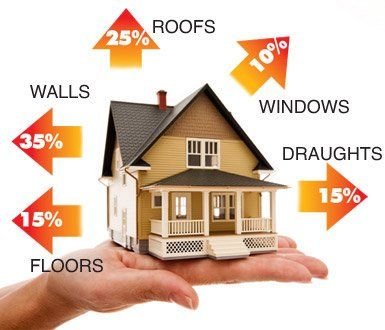
Savings range from £300 to £500 per year on heating bills, depending on property size and energy prices. Properties with Oil, LPG or Electricity heating will save considerably more.
📞 Call us today on 07960 799681 or 08008 101060 or complete our Enquiry Form to request your free survey.
10. What is the payback time for cavity wall insulation?
If you are someone who does not qualify for a grant and would have to pay the full price, then typically it would take between 3 and 5 years to recover the cost, after which the insulation continues to save you money, year after year.
📞 Call us today on 07960 799681 or 08008 101060 or complete our Enquiry Form to request your free survey.
11. Are there government grants or funding for cavity wall insulation?
Yes, schemes such as GBIS and ECO4 will cover the full cost.
📞 Call us today on 07960 799681 or 08008 101060 or complete our Enquiry Form to request your free survey.
12. Is cavity wall insulation worth the investment?
If you are one of the few who have to pay for cavity wall insulation, it usually pays for itself within 3 to 5 years and can make your home warmer, more energy efficient, and more attractive to buyers. After you have recovered the cost, you will continue to save 25% of your heating bills every year after (and increasing with inflation).
📞 Call us today on 07960 799681 or 08008 101060 or complete our Enquiry Form to request your free survey.
🛠️ Installation Process
13. How is cavity wall insulation installed?
We use a proven method that fills the empty space between your walls with polystyrene beads — creating a powerful insulating layer that locks in heat. Installation is quick, clean, and hassle-free, with most homes completed in just around three hours.
How It Works
- Precision Drilling: Small 22mm holes (just smaller than a 2p coin) are drilled into your outer walls following strict British Board of Agrément (BBA) guidelines.
- Smart Injection: The insulation and adhesive are carefully injected through the holes, bonding together within 20 minutes to form a stable, energy-efficient barrier.
- Seamless Finish: Once complete, the holes are filled with colour-matched mortar or render, blending perfectly with your existing walls.
Why Choose Us
- Fast, professional installation — usually complete within half a day
- No mess, no fuss — customers love how neat the process is
- 25-year CIGA guarantee — full peace of mind backed by a government-approved body
- Lower energy bills & reduced heat loss — make your home more efficient year-round
Let us help you make your home warmer, greener, and more comfortable — for good.
📞 Call us today on 07960 799681 or 08008 101060 or complete our Enquiry Form to request your free survey.
14. How long does installation take?
Most homes can be completed in 2 to 4 hours. Customers are amazed that it is done so quickly and with no mess, and they immediately notice the difference in how much warmer the house is.
📞 Call us today on 07960 799681 or 08008 101060 or complete our Enquiry Form to request your free survey.
15. Will the installation be messy or disruptive?
The process is quick and clean. Installers work outside, so no disruption inside whatsoever, and any mess outside is minimal and will be cleaned up.
📞 Call us today on 07960 799681 or 08008 101060 or complete our Enquiry Form to request your free survey.
16. Do I need to prepare my home before installation?
No major preparation is needed. Installers may ask you to clear access around outside walls.
📞 Call us today on 07960 799681 or 08008 101060 or complete our Enquiry Form to request your free survey.
17. Who can install cavity wall insulation – do I need an approved installer?
It’s not a “DIY” job!
Yes, a certified installer approved by the Government scheme.
📞 Call us today on 07960 799681 or 08008 101060 or complete our Enquiry Form to request your free survey.
🌡️ Benefits & Performance
18. How much warmer will my house feel with cavity wall insulation?
35% of the home’s heat is lost through the walls. It reduces that heat loss by 70%, meaning your home will feel noticeably warmer in winter and cooler in the summer.
You will find that you will set the thermostat to a lower temperature, because there is less heat seeping through the walls. That also means lower fuel bills.
📞 Call us today on 07960 799681 or 08008 101060 or complete our Enquiry Form to request your free survey.
19. Does cavity wall insulation help reduce noise?
Yes, it can help reduce outside noise, but it is not what it is designed for.
📞 Call us today on 07960 799681 or 08008 101060 or complete our Enquiry Form to request your free survey.
20. How long does cavity wall insulation last?
Cavity wall insulation is designed to last the lifetime of the building. It is guaranteed for 25 years.
📞 Call us today on 07960 799681 or 08008 101060 or complete our Enquiry Form to request your free survey.
21. Will cavity wall insulation reduce condensation or damp?
Can Cavity Wall Insulation Help with Condensation?
Absolutely — cavity wall insulation can be extremely effective in reducing condensation and the problems it causes.
Condensation forms when warm, moist air meets a cold surface. As the air cools, it releases moisture, which settles as tiny water droplets on walls, windows, or ceilings. If this moisture isn’t dried quickly, it can lead to black mould and damp patches.
By insulating your cavity walls, the inside surfaces of your home stay warmer, meaning condensation is far less likely to develop. This helps prevent dampness and mould, creating a healthier, more comfortable living environment.
In short, installing free cavity wall insulation is one of the most effective ways to reduce or even eliminate condensation in your home.
📞 Call us today on 07960 799681 or 08008 101060 or complete our Enquiry Form to request your free survey.
⚠️ Risks & Problems
22. Can cavity wall insulation cause damp problems?
Dealing with Damp Before Insulating
If you’ve noticed damp patches on the inside of your external walls, it’s important to get these issues resolved before any insulation work takes place.
Under the Great British Insulation Scheme (GBIS), every property must pass a Cavity Assessment Survey (CAS) before insulation can be installed. If damp is present, the property will not pass this survey — and therefore will not qualify for a government grant.
This rule exists because all grant-funded installations must come with a 25-year guarantee, which can only be issued once the property meets the required standards. In short, if damp is detected, the insulation cannot go ahead until the problem is fixed.
However, not all wall staining or mould growth means structural damp. If you’ve spotted black mould or small dark patches, these are often signs of condensation, not penetrating damp.
In around 90% of cases, condensation comes down to everyday living habits — like limited ventilation, drying clothes indoors, or using heating inconsistently — rather than any defect in the building itself.
In fact, properly installed cavity wall insulation can often help with this problem by keeping internal walls warmer, which reduces condensation and can even eliminate black mould altogether.
A full pre-installation survey will avoid this risk.
Our survey typically takes 2 to 3 hours to complete.
📞 Call us today on 07960 799681 or 08008 101060 or complete our Enquiry Form to request your free survey.
23. What happens if cavity wall insulation is installed incorrectly?
Poor installation can cause cold spots and dampness. That’s why using an approved, experienced installer is essential, together with carrying out a thorough survey.
📞 Call us today on 07960 799681 or 08008 101060 or complete our Enquiry Form to request your free survey.
24. Can cavity wall insulation be removed if it causes problems?
Yes, specialist contractors can extract insulation, although it can be costly. The 25-year government-approved guarantee may cover the full or partial cost. There aren’t any grants available for removing cavity wall insulation.
📞 Call us today on 07960 799681 or 08008 101060 or complete our Enquiry Form to request your free survey.
25. Is cavity wall insulation guaranteed, and who provides the guarantee?

Yes. The 25-year Government-approved guarantee is issued by The Installation Assurance Authority (IAA), a part of CIGA ( Cavity Insulation Guarantee Agency)
📞 Call us today on 07960 799681 or 08008 101060 or complete our Enquiry Form to request your free survey.
🔎 Extra Suitability & Checks
26. How do I know if my home is losing heat through the walls?
If the walls are not insulated, you will be losing 35% of the property’s heat through them, resulting in high heating bills, cold rooms, and potentially condensation and black mould.
📞 Call us today on 07960 799681 or 08008 101060 or complete our Enquiry Form to request your free survey.
27. Can cavity wall insulation be installed in flats or apartments?
Yes, but usually the whole block must be insulated together.
📞 Call us today on 07960 799681 or 08008 101060 or complete our Enquiry Form to request your free survey.
28. Is cavity wall insulation suitable for bungalows?
Yes, it’s often very effective in single-storey homes.
📞 Call us today on 07960 799681 or 08008 101060 or complete our Enquiry Form to request your free survey.
29. Can cavity wall insulation be used in detached, semi-detached, and terraced houses?
Yes, all types of properties can benefit, provided that they have an empty cavity wall.
📞 Call us today on 07960 799681 or 08008 101060 or complete our Enquiry Form to request your free survey.
30. Can I insulate just one wall, or does the whole house need to be done?
If the installation is being done under a grant scheme, at least 67% of all the walls must be insulated. Not insulating all walls can create condensation because the walls will have different heat loss levels.
📞 Call us today on 07960 799681 or 08008 101060 or complete our Enquiry Form to request your free survey.
31. What if my walls are already insulated but not effectively?
You could contact the Cavity Insulation Guarantee Agency (CIGA). Otherwise, you would have to “Extract & Fill”. To do that in a 3-bed semi-detached house would cost about £3,000. There are no grants for “Extraction and Fill”.
📞 Call us today on 07960 799681 or 08008 101060 or complete our Enquiry Form to request your free survey.
32. Can cavity wall insulation be topped up?
No!
📞 Call us today on 07960 799681 or 08008 101060 or complete our Enquiry Form to request your free survey.
33. What thickness of cavity is required for insulation?
At least 50mm is needed. This would be checked as part of our Retrofit Assessment.
📞 Call us today on 07960 799681 or 08008 101060 or complete our Enquiry Form to request your free survey.
34. Do I need planning permission for cavity wall insulation?
No, unless your property is listed or in a conservation area. However, some local authorities insist that the cavities have to be insulated if the walls are to be rendered or rerendered. Neath and Port Talbot County Council is one of them.
📞 Call us today on 07960 799681 or 08008 101060 or complete our Enquiry Form to request your free survey.
35. Will a building survey pick up cavity wall insulation issues?
Could do. Many surveyors check insulation during property sales.
📞 Call us today on 07960 799681 or 08008 101060 or complete our Enquiry Form to request your free survey.
💷 More Costs, Grants & Value
36. Can I get cavity wall insulation for free?
Yes, using The Great British Grant Scheme (GBIS). To qualify under this scheme, you must meet two key criteria:
HOME OWNERS: There is no income threshold, and you do not need to receive any Government benefits.
Your Council Tax Band: In Wales, it must fall under bands A to E. In England, your property must be in bands A, B, C or D.
You can check your council tax band on the Gov.UK website. ✔
Your Energy Performance Certificate (EPC) Rating: Your property must have an EPC rating of D, E, F, or G, which can be verified on
the EPC Register. ✔
You do not need an EPC to apply for the grant. We will produce an EPR (an unregistered EPC) as part of the process. But it will need to be in bands D, E, F or G.
If you satisfy the Council Tax Band and the Energy Performance Certificate (EPC) Rating, you qualify!
PRIVATE TENANTS: You will need to receive a qualifying benefit. These can be found here.
📞 Call us today on 07960 799681 or 08008 101060 or complete our Enquiry Form to request your free survey.
37. Does cavity wall insulation increase property value?
Energy-efficient features, including cavity wall insulation, can enhance the value of a property.
Potential buyers or renters may see the investment in insulation as a positive feature, especially as energy efficiency becomes an increasingly important consideration.
Some mortgage lenders are offering “Green Mortgages” based on the energy performance certificate rating of the property.
📞 Call us today on 07960 799681 or 08008 101060 or complete our Enquiry Form to request your free survey.
38. Is cavity wall insulation tax-deductible?
No.
📞 Call us today on 07960 799681 or 08008 101060 or complete our Enquiry Form to request your free survey.
39. Are there local council schemes for free insulation?
Not at this moment in time.
The Great British Insulation Scheme (GBIS) will satisfy 80% of privately owned properties, including privately rented, and is available across the whole of Wales.
However, a tenant will need to be in receipt of a qualifying benefit.
📞 Call us today on 07960 799681 or 08008 101060 or complete our Enquiry Form to request your free survey.
40. Does cavity wall insulation affect my Energy Performance Certificate (EPC) rating?
Yes — it improves your EPC rating by reducing heat loss, which will increase the energy efficiency of the property. It can improve the EPC rating by 2 to 10 points, depending on the size of the property and the heating fuel.
📞 Call us today on 07960 799681 or 08008 101060 or complete our Enquiry Form to request your free survey.
🛠️ Extra Installation Details
41. What happens during a cavity wall insulation survey?
As part of the survey, small test holes are drilled into each wall elevation, allowing a borescope (a specialised camera) to be inserted for inspection of the inside of the cavity. This process includes taking photographs, measuring cavity depth, and gathering other relevant data.
The walls are thoroughly assessed for any defects, such as cracks, unsealed holes, or other issues that need to be resolved before insulation can begin. Additionally, gutters and downpipes are checked for leaks, blockages, and to ensure they are draining correctly.
📞 Call us today on 07960 799681 or 08008 101060 or complete our Enquiry Form to request your free survey.
42. What size holes are drilled for cavity wall insulation?
Usually around 23mm (1 inch), later filled with matching mortar/colour.
📞 Call us today on 07960 799681 or 08008 101060 or complete our Enquiry Form to request your free survey.
43. Will the mortar colour match after installation?
Installers use the closest match possible, so it blends in.
📞 Call us today on 07960 799681 or 08008 101060 or complete our Enquiry Form to request your free survey.
44. Can cavity wall insulation be installed in bad weather?
Yes, under normal British weather. But under extremely bad weather, safety aspects will have to be taken into account.
📞 Call us today on 07960 799681 or 08008 101060 or complete our Enquiry Form to request your free survey.
45. Do I need to be at home during installation?
Yes, you will have to be present, but most work is outside. You will need to sign some documents when the job is completed.
📞 Call us today on 07960 799681 or 08008 101060 or complete our Enquiry Form to request your free survey.
🌡️ Extra Benefits & Performance
46. Will cavity wall insulation make my home cooler in summer?
Yes — it helps regulate temperature year-round.
📞 Call us today on 07960 799681 or 08008 101060 or complete our Enquiry Form to request your free survey.
47. Does cavity wall insulation reduce carbon emissions?
Yes — by cutting energy use, it lowers the carbon footprint of the property. A semi-detached house would save about 800 kg CO₂ per year.
Specific annual CO₂ savings by house type, according to the Energy Saving Trust and other sources, are typically:
- Flat: 360 kg/year
- Mid-terrace house: 550-590 kg/year
- Semi-detached house: 680-930 kg/year
- Detached house: 1,100-1,540 kg/year
📞 Call us today on 07960 799681 or 08008 101060 or complete our Enquiry Form to request your free survey.
48. Does it improve indoor air quality?
Indirectly, warmer walls can reduce condensation and black mould and therefore improve the indoor air quality.
📞 Call us today on 07960 799681 or 08008 101060 or complete our Enquiry Form to request your free survey.
49. Can cavity wall insulation help reduce mould growth?
Absolutely — cavity wall insulation can be extremely effective in reducing condensation and the resultant black mould, and the problems it causes.
Condensation forms when warm, moist air meets a cold surface. As the air cools, it releases moisture, which settles as tiny water droplets on walls, windows, or ceilings. If this moisture isn’t dried quickly, it can lead to black mould and damp patches.
By insulating your cavity walls, the inside surfaces of your home stay warmer, meaning condensation is far less likely to develop. This helps prevent dampness and mould, creating a healthier, more comfortable living environment.
In short, installing free cavity wall insulation is one of the most effective ways to reduce or even eliminate condensation in your home.
📞 Call us today on 07960 799681 or 08008 101060 or complete our Enquiry Form to request your free survey.
50. Will cavity wall insulation improve the overall comfort of my home?
Insulating cavity walls helps to create a more consistent and comfortable indoor temperature, making living spaces more pleasant throughout the year.
Absolutely — most homeowners notice a big difference from the day it is installed.
📞 Call us today on 07960 799681 or 08008 101060 or complete our Enquiry Form to request your free survey.
✅ Ready to Take the Next Step?
If you’re ready to enjoy a warmer home with lower energy bills, the next step is simple: book a free, no-obligation survey with our team. We’ll check if your property is suitable, explain your options, and let you know if you qualify for the government grant – The Great British Insulation Scheme.
📞 Call us today on 07960 799681 or 08008 101060 or complete our Enquiry Form to request your free survey.
Don’t wait another winter — start saving energy and money now with professionally installed cavity wall insulation.
