Free cavity wall insulation Wales is available to 87% of homes.
There are no income thresholds and no benefits required.
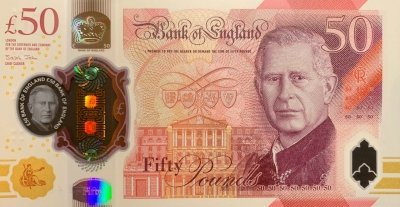
Every customer who has cavity wall insulation installed using our service will receive a £50 thank you!
How do I qualify for free cavity wall insulation in Wales?
The qualification for Free cavity wall insulation in Wales is very simple.
There are 2 routes to qualification – the “General Group” and the “Low Income Group”. If your home is privately rented, you will only qualify using the “Low Income Group”.
1. The “General Group”
Just tick 2 boxes.
Is your Council Tax Banding an A, B, C, D or E? You can find your Council Tax Banding here.
and
Is your EPC (Energy Performance Certificate) rating a D, E, F or G? You can find your EPC rating here.
If you have answered YES to both of the above questions, you qualify for free cavity wall insulation in Wales.
Don’t panic if you don’t have an EPC we will sort that out as part of our Free No Obligation Survey.
If you are a private tenant, you will need to be receiving a qualifying benefit (see the “Low Income Group” below).
Footnote. In England, Council Tax Bandings are only A, B, C, or D.
2. The “Low Income Group”.
The personal qualification criteria for the “low-income” group are benefit-based. The qualifying benefits are listed below. However, your EPC (Energy Performance Certificate) rating must be a D, E, F or G. (D or E if you are a private tenant).
Here is the list of Qualifying Benefits.
- Pension Credit
- Income-Based Job Seekers’ Allowance
- Universal Credit – No income threshold
- Income-Related Employment and Support Allowance
- Tax Credits (including Working and Child Tax Credits) – No income threshold
- Income Support
- Housing Benefit – NEW
- Child Benefit/Family Allowance. Income Thresholds apply – see table below
| Number of children | 1 | 2 | 3 | 4 |
| 1 adult household | £19,900 | £24,800 | £29,600 | £34,500 |
| 2 adult household | £27,500 | £32,300 | £37,200 | £42,000 |
Book a Free No Oligation Survey NOW!
or call us on 0800 8 10 10 60 or 07960 799681 and speak to one of our cavity wall insulation experts.
What happens next?
If you have some questions about Cavity Wall Insulation, please look at our Benefits of Cavity Wall Insulation section below or our 50 FAQs page.
We would arrange a Free No Obligation Survey of your home. The survey is a combination of 3 surveys and takes about 2-3 hours. The survey is carried out by an accredited Retrofit Assessor.
Having established that you qualify, the surveys below will establish that your property qualifies as well.
The surveys.
Survey 1.
This is a survey of the walls of your home. The surveyor will drill a small (12mm) hole in each elevation. He/She will then take photos of inside the cavity of each elevation. This is to check that it has not already been insulated and that it’s good to do. An assessment is then made of many factors. These include a damp-proof course, gutters, downpipes, cracks in walls, damp inside the house, etc. This survey is then uploaded to the IAA (the Insulation Assurance Authority), which will audit the data. All being good, they will issue the Government-approved 25-year guarantee. This is a requirement of the Great British Insulation Scheme regulations.
Survey 2.
This is a survey of the house concerning its energy performance. The survey uses the same dataset as an Energy Performance Certificate (EPC), but it does not get registered. It will give us the energy performance rating for the day of the survey. EPCs can be years out of date.
Survey 3.
This is a Retrofit Assessment. It considers the ventilation and condition of the property as required by the Government grant regulations.
If there are any issues, we will discuss them with you.
We will then book the job in.
It will normally take about 3 hours to insulate a semi-detached house and 4 hours for a detached house. The installation team will make good the holes with closely matching cement/paint. You will have a first-class finish with a minimum of fuss and disruption. Most of our customers are amazed at how quickly and neatly the job can be done. And all with a 25-year guarantee.
What are the benefits of having Cavity Wall Insulation in Wales?
Cavity wall insulation can offer several benefits, including:
Energy Efficiency:
Insulating the cavity walls helps to reduce heat loss through the walls of your home. This will improve the energy performance of your home.
Cost Savings:
By reducing the amount of energy needed to heat your home, cavity wall insulation can lead to lower energy bills. It should reduce your heating and hot water bills by at least 25%.
Increased Comfort:
Insulating cavity walls helps to create a more consistent and comfortable indoor temperature, making living spaces more pleasant throughout the year.
Environmental Impact:
Improved energy efficiency means lower carbon emissions associated with your heating system. This can reduce the carbon emissions of your home, resulting in a smaller carbon footprint for the building.
Condensation Control:
Cavity wall insulation can also help reduce or eliminate condensation within the walls. Condensation can lead to dampness, mould growth, and other issues, including health conditions. Insulation helps to keep the interior walls warmer, therefore reducing the likelihood of condensation.
Property Value:
Energy-efficient features, including cavity wall insulation, can enhance the value of a property. Potential buyers or renters may see the investment in insulation as a positive feature, especially as energy efficiency becomes an increasingly important consideration. Some mortgage lenders are offering “Green Mortgages” based on the energy performance certificate rating of the property.
Noise Reduction:
Cavity wall insulation can provide some level of soundproofing by dampening external noises. This can be particularly beneficial in urban areas or locations with high levels of ambient noise.
Quick Installation:
Cavity wall insulation is normally quick to install. An average-sized semi-detached house would take about 3 hours to complete, causing minimal disruption to occupants. The process involves injecting insulating material into the cavity between the inner and outer walls of a building.
To find out if you qualify or to book a free, no-obligation survey, complete our enquiry form or give us a call on 0800 8 10 10 60 or 07960 799681.
To find out more, have a look at our 50 FAQs for Free Cavity Wall Insulation
